The Big Freeze, Crunch, or Rip: How Will the Universe End?
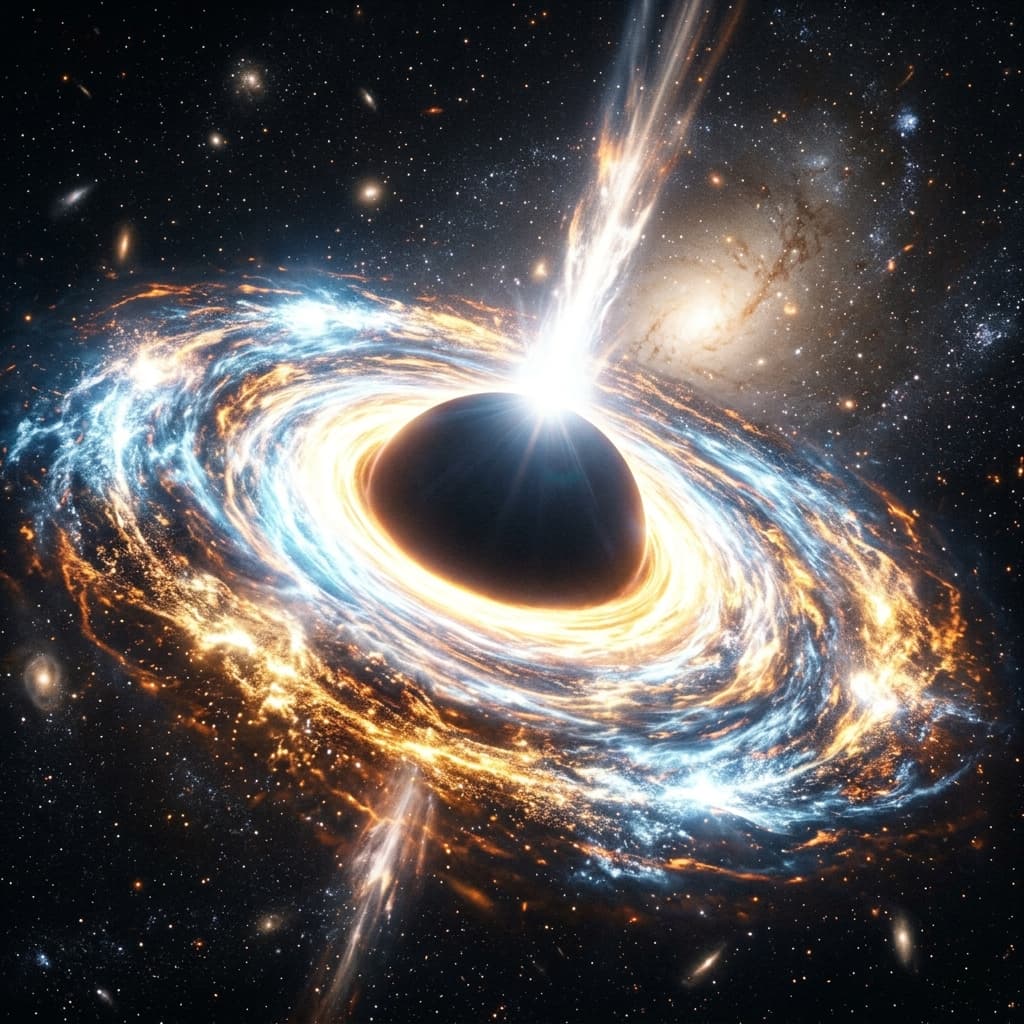
TL;DR Summary
Everything has an end. Astrophysicists have mapped out the three most likely scenarios for the death of the universe.
The universe was born in the Big Bang 13.8 billion years ago. But how will it die?
The ultimate fate of the universe depends on a cosmic tug-of-war between two forces: the gravitational pull of all the matter in the universe trying to pull everything back together, and the mysterious repulsive force of Dark Energy pushing space apart.
Based on current observations, astrophysicists have narrowed down the apocalypse to three leading theories.
1. The Big Freeze (Heat Death)
This is the most widely accepted theory based on current data. Dark Energy wins the tug-of-war. The universe continues expanding forever, accelerating as it goes.
As space stretches, galaxies drift so far apart that they can no longer see each other. The gas required to form new stars is depleted. Over trillions of years, the last stars slowly burn out, leaving a pitch-black universe populated only by dead black dwarfs, neutron stars, and black holes.
Eventually, even the black holes will evaporate through Hawking radiation. In the incomprehensibly distant future (a googol years from now), all matter will decay, and all temperature differences will balance out. The universe will reach maximum entropy—a state of freezing, endless, dark emptiness where nothing ever happens again. This is known as Heat Death.
2. The Big Crunch
In this scenario, Gravity wins. If there is enough matter in the universe (or if Dark Energy eventually weakens), the expansion of the universe will eventually slow down, stop, and reverse.
Galaxies will begin rushing toward each other. The universe will compress, becoming denser and unimaginably hotter. The cosmic microwave background radiation will become so intense it will cook the stars from the outside in. Eventually, all matter and space will crush back into a single, infinitely hot, infinitely dense point—a singularity. Some theorists suggest this could trigger a new Big Bang, creating an endless cycle of expanding and contracting universes (the Big Bounce).
3. The Big Rip
This is the most violent scenario. If Dark Energy doesn't just remain constant but actually increases in strength over time ("phantom dark energy"), the expansion of the universe will accelerate uncontrollably.
First, the expansion will tear apart massive galaxy clusters. Then, it will rip individual galaxies apart, flinging stars into the void. Eventually, the expansion of space will become so fast that it overpowers the gravity holding solar systems together, stripping planets from their suns. In the final minutes of the universe, it will overpower the electromagnetic and strong nuclear forces, literally tearing atoms and subatomic particles apart. The fabric of spacetime itself will shred.