Rogue Planets: Worlds Wandering in the Dark
TL;DR Summary
Not all planets orbit a star. Trillions of rogue planets drift alone through the freezing, pitch-black void of interstellar space.
When we think of a planet, we naturally imagine a world orbiting a star, warmed by its light. But the universe is full of exiles.
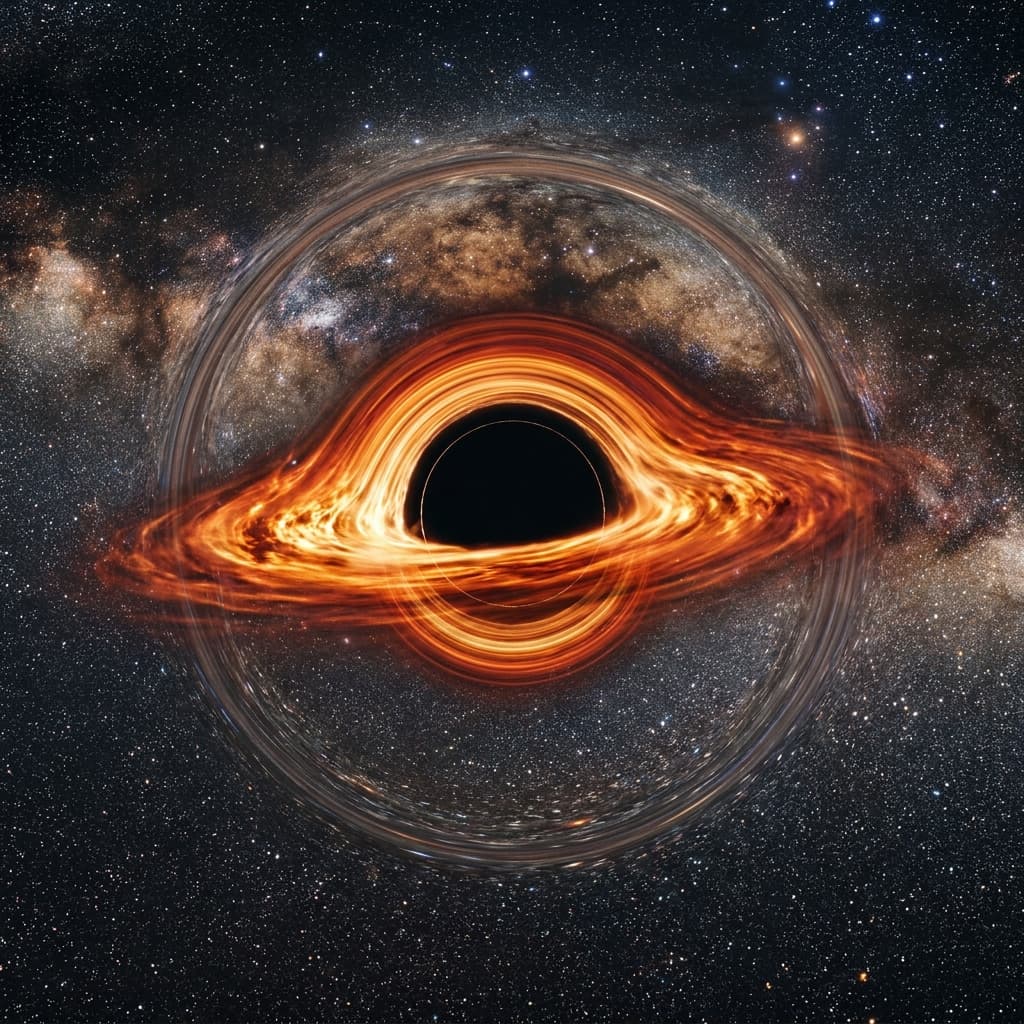
Rogue planets (or free-floating planets) are planetary-mass objects that do not orbit any star. Instead, they wander alone through the freezing, pitch-black void of the Milky Way. Astronomers estimate there could be trillions of these dark wanderers in our galaxy—possibly outnumbering the stars themselves.
How Does a Planet Go Rogue?
Planets aren't born in the void. They form in the swirling disks of gas and dust surrounding young stars. However, young solar systems are incredibly violent and chaotic places. As massive planets like Jupiter migrate inward or outward, their immense gravity can act like a slingshot.
If a smaller planet crosses paths with a gas giant, the gravitational interaction can violently eject the smaller planet completely out of the solar system. Cut off from its sun, it is doomed to drift through interstellar space forever.
How Do We Find Them?
Because rogue planets have no star to illuminate them, they emit almost no light and are nearly invisible to conventional telescopes.
To find them, astronomers use a technique called Gravitational Microlensing. When a rogue planet drifts perfectly between Earth and a distant background star, the planet's gravity bends and magnifies the star's light. By observing this brief, temporary brightening of the background star, astronomers can detect the unseen rogue planet.
Could Life Exist in the Dark?
Space is unimaginably cold (about -270°C). Without a star, the surface of a rogue planet would freeze solid. Any oceans would turn into a thick layer of ice.
However, deep beneath the ice, conditions might be very different. If a rogue planet is massive enough, the radioactive decay of elements in its core could generate intense internal heat. This geothermal energy could maintain a subsurface ocean of liquid water, much like Jupiter's moon Europa. While complex, surface-dwelling life is impossible, it is theoretically possible for extremophile bacteria or hydrothermal vent ecosystems to thrive deep inside a sunless, rogue world.